





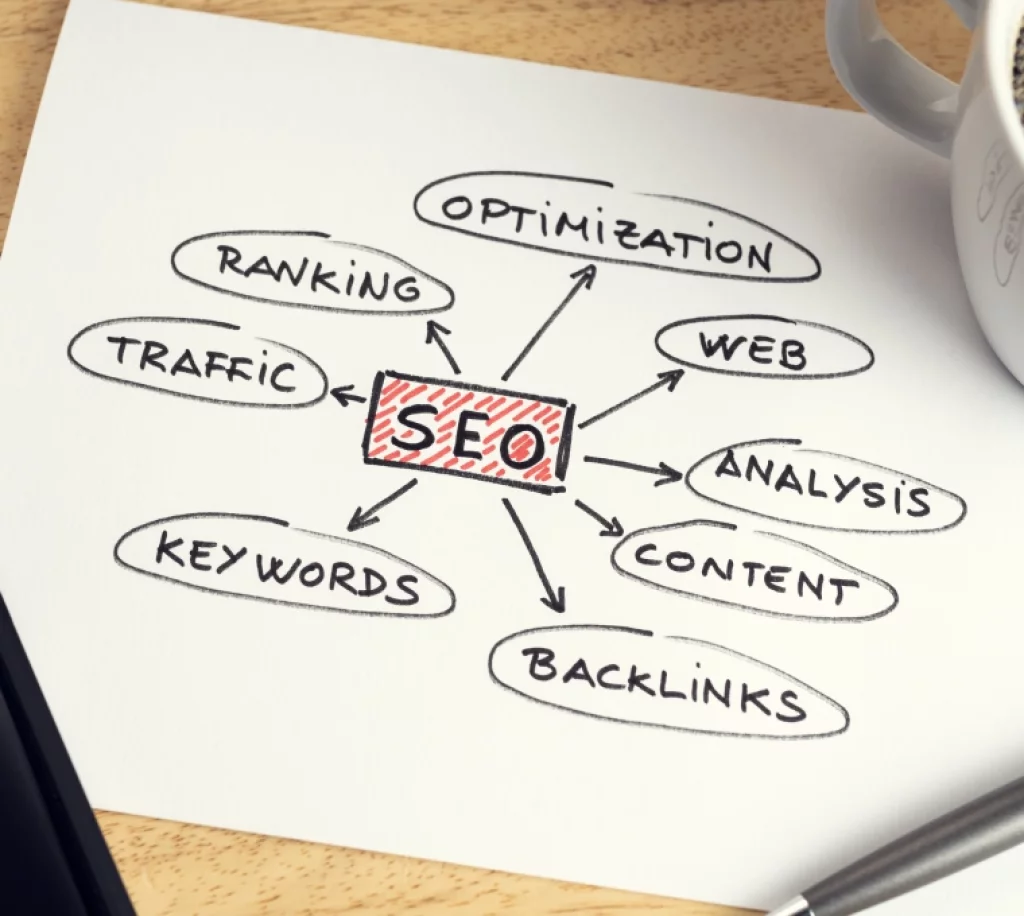
The three letters SEO stand for "Search Engine Optimization". SEO aims to improve your website's visibility so that it ranks better in search results on Google, Bing and others. The higher your SEO ranking, the more likely your site is to appear near the top of the results, and the faster and more effectively your target audience will be directed to it. A good ranking means appearing on the first page of the search engine, because most users only look at the first page of results.
An example search for "Migros":

Why do you need SEO, and how does it work?
Few people know the exact URL (web address) of the page they want to visit. Almost everyone searches for the "right link" using one or more keywords (search terms). Most of the time, users don't know exactly which website they are looking for; they simply want information on a topic, a good online shop, a supplier for a product, and so on.
To make sure searchers end up on your website rather than a competitor's, you need to understand how Googlebot and its crawlers (also called robots or spiders) work. The crawler explores your website, moving from document to document and analysing all text elements (HTML) such as titles, keywords and headings. This is how it determines what your page is about. At the same time, Google evaluates and ranks (indexes) the quality of your page and decides which keywords should lead to it. Because Google is a text-based search engine, it relies mainly on the written content of your site.
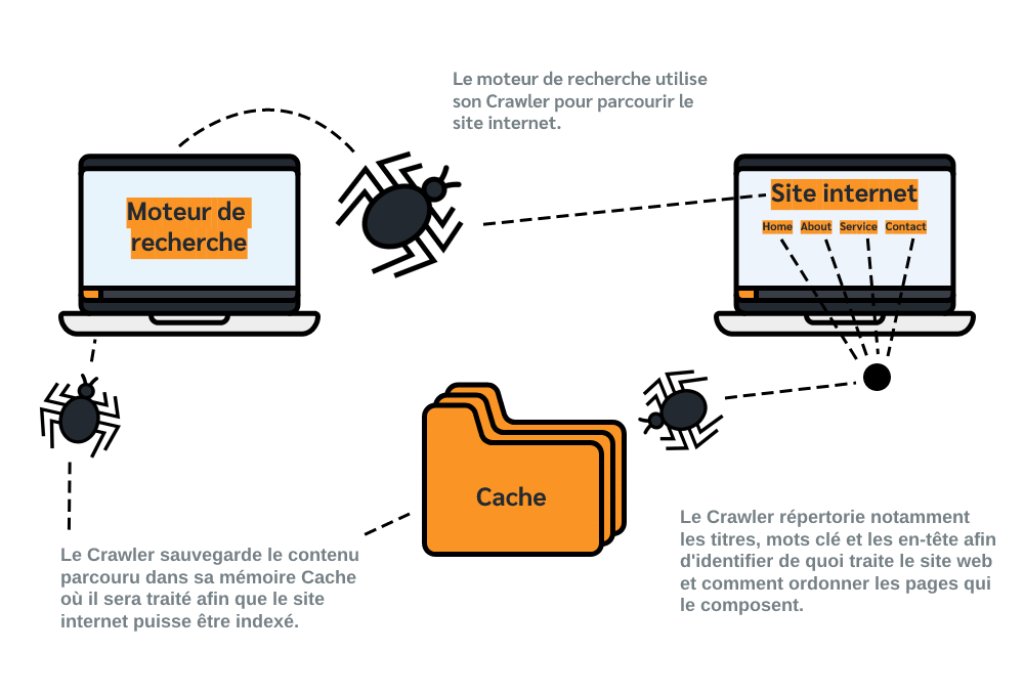
Search engines have one goal: to give users the most relevant results for their query.
Are you registered with Google My Business?
If you're not yet registered with Google My Business, we recommend doing so quickly. The service lets businesses display their information directly on Google (to the right of the search results), without users having to click a result first. Registering increases your company's visibility, so you reach more potential customers.
It's important to check this information regularly and keep it up to date. Your prospects rely on details such as your phone number, opening hours and location!

The small difference between SEO and SEA
The A in SEA stands for Advertising: SEA is Search Engine Advertising, meaning paid ads on a search engine. When users search for a certain keyword, your sponsored text ("ad") appears above the unpaid search results. A prominent position means more visibility.

Does Google know your site?
The easiest way to find out whether Google knows your site is to run a site search on Google, for example "site:seekers.ch". If results appear, your site is indexed.

If not, one of the following is probably the reason:
The website is not linked enough from other websites. A site that is referenced by other sites gains visibility in search engines.
The site was published recently and Google's crawlers have not visited it yet.
The website structure is poorly defined, making it hard for Google's crawlers to explore.
Google tried to crawl the site but received an error message.
The rules set for your site block Googlebot from crawling it.
How does "ranking" work?
Website content must be high quality and match what users are searching for.
Important technical factors such as a clear site structure and well-designed internal linking are essential.
The quality of backlinks (links to and from other websites) should not be underestimated, even if it matters less than it used to.
User experience: its influence is debated, but a website tends to rank higher if it is clicked more often in the search results than others, or if users return to Google from it less often.
Key factors for a good ranking:
Keywords: mention them in all important parts of the text, such as the title or subtitle.
Well-crafted title tags (more on this in the second part of the Seekers SEO blog), also called meta titles, SEO titles or page titles, are required for every HTML (HyperText Markup Language) document. HTML is the code used to structure web content and give it meaning and purpose. After the content itself, the title tag is considered one of the most important factors for page optimisation and ranking.
Semantics means "the study of meaning". Semantic search analyses the meaning behind the words in a query rather than a single keyword. It is becoming more important, partly because searches are getting longer and partly because voice search is becoming more common. Example: for the query "European country with mountains and chocolate", Google will quickly suggest our beautiful country, even though the keyword itself never appears.

Site structure, URL, content: how user-friendly is your site?
URL – your ideal URL is short and meaningful. Avoid umlauts, accents and special characters, and leave out unnecessary filler words. Always separate words with hyphens.
Structure – when visiting your site, users should immediately understand its purpose and what they will find there. Clear, understandable navigation is crucial, as is the structure of your text and visual content. All of these contribute to your site's visibility in search engines.
Content – user-friendly content should also be clear and easy to access. Use structural elements such as bullet points, numbered lists and tables when building the website. These factors also matter for accessibility (a topic for a future Seekers blog post).
Can your site be excluded from Google search?
Yes, in principle it can. To make sure it doesn't happen to you, follow these key rules:
No duplicate content or reused texts.
Don't overdo keyword repetition.
Don't abuse Google's guidelines.
No attempts at manipulation.
Remember: Google spots these tricks faster than you think!
Conclusion: how can the search engine find you as quickly as possible?
In summary, to be found quickly by search engines, keep these points in mind:
Valuable, clear, easily accessible and well-structured content
Keywords in the right places in the text
A simple, short URL
Quality links
A Google My Business listing
No exclusion criteria
Are you an SEO expert now?
We hope we've helped you get familiar with SEO. If you have any questions, feel free to contact us. We'll be happy to advise you and optimise your site for you. In a future blog post, we'll dive deeper into specific SEO topics.